






 Payment Plans
Discharging a Firearm Charges in California: Expert Defense from The Law Offices of David Chesley
If you're facing discharging a firearm charges in California, the stakes couldn't be higher—potential prison time, hefty fines, and a felony record that could derail your career, family life, and future opportunities. These accusations often stem from celebratory gunfire, hunting mishaps, self-defense claims, or heated disputes that escalate quickly under California's stringent gun laws. But an arrest doesn't mean conviction; many cases involve overzealous prosecution or lack of intent. At The Law Offices of David Chesley, a premier California criminal defense law firm, we've defended countless clients against Penal Code 246 and 246.3 charges, achieving dismissals, reduced sentences, and acquittals through aggressive strategies, expert witnesses, and in-depth investigations. This comprehensive guide is tailored for those charged with discharging a firearm in California, offering clear, detailed insights into the laws, penalties, defenses, and more. Whether you're searching for a "discharging a firearm lawyer California," "PC 246 defense," "negligent discharge penalties CA," or "defending firearm discharge charges in California," we've got the information you need. Contact us for a free consultation—we're here to protect your rights and fight for the best outcome.
Understanding Discharging a Firearm Laws in California
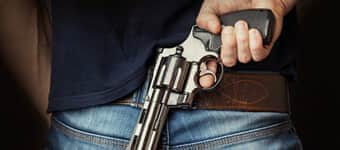
Discharging a firearm in California encompasses several offenses under the Penal Code, designed to prevent reckless or malicious gunfire that endangers public safety. The most common charges are under Penal Code 246 PC (shooting at an inhabited dwelling or occupied vehicle) and Penal Code 246.3 PC (negligent discharge of a firearm). These laws don't require actual injury; the potential for harm is enough for prosecution.
Penal Code 246 PC: Shooting at an Inhabited Dwelling or Occupied Vehicle
Under PC 246, it's a felony to willfully and maliciously discharge a firearm at an inhabited dwelling, occupied building, occupied motor vehicle, occupied aircraft, or inhabited housecar. "Willfully" means you intentionally fired the gun, while "maliciously" implies intent to do wrong or annoy. Prosecutors must prove:
- You discharged a firearm.
- It was directed at a qualifying target (e.g., a home with people inside).
- The act was willful and malicious.
- It wasn't in lawful self-defense.
This charge often arises in drive-by shootings or disputes where shots are fired toward property. No need for the bullet to hit—missing still counts if aimed at the target.
Penal Code 246.3 PC: Negligent Discharge of a Firearm
PC 246.3 makes it illegal to willfully discharge a firearm in a grossly negligent manner that could result in injury or death to a person. "Gross negligence" means reckless disregard for safety, like firing into the air in a populated area. Elements include:
- Willful discharge (intentional act).
- Gross negligence (reasonable person would foresee risk).
- Potential for injury/death.
This is a "wobbler" offense, chargeable as misdemeanor or felony based on circumstances, priors, and DA discretion.
Other related laws: PC 26100 (drive-by shooting, felony up to 7 years), PC 247 (discharging at unoccupied property, misdemeanor/felony). California's strict gun laws, ranked #1 nationally, amplify these charges, especially with mandatory reporting for gunshot wounds. As of 2025, no major changes to these codes, but enhanced tracing under AB 1191 may increase prosecutions.
Penalties for Discharging a Firearm Charges in California
Penalties vary by code and charge level, with felonies triggering strikes under Three Strikes Law.
For PC 246 (Shooting at Inhabited Dwelling)
- Felony: 3, 5, or 7 years in state prison.
- Fines up to $10,000.
- Serious/violent felony strike; great bodily injury adds 3-6 years (PC 12022.7).
For PC 246.3 (Negligent Discharge)
- Misdemeanor: Up to 1 year in county jail, fines up to $1,000.
- Felony: 16 months, 2, or 3 years in prison; counts as serious felony strike if felony.
Additional consequences: Lifetime gun ban, probation violations, deportation for non-citizens, and civil liability. In 2025, with gun violence focus, expect aggressive sentencing.
Alternative Sentences and Diversion Programs
Alternatives emphasize rehabilitation, especially for first-timers or mitigated cases.
- Probation: 3-5 years, with firearm surrender, anger management, community service, and fines. Available for misdemeanors or reduced felonies.
- Diversion: Mental health (PC 1001.36) or drug diversion (PC 1000) if underlying issues; completion dismisses charges.
- Plea Bargains: Reduce to disturbing the peace (PC 415) or misdemeanor assault.
- Expungement: Post-probation under PC 1203.4.
We negotiate these to avoid strikes and jail.
Hypothetical Examples of Discharging a Firearm Charges
Hypotheticals (not advice):
- Celebratory Gunfire (PC 246.3): Firing into the air at a party; bullet could fall and injure—misdemeanor if no harm. Defense: No negligence.
- Dispute Escalation (PC 246): Shooting at a neighbor's occupied house during an argument—felony, 3-7 years. Defense: Self-defense.
- Hunting Mishap (PC 246.3): Accidental discharge near hikers—wobbler. Defense: Accident.
- Drive-By (PC 26100): Firing from car at vehicle—felony up to 7 years. Defense: Misidentification.
- Warning Shot (PC 246): Firing at occupied car to scare intruder—strike offense. Defense: Lawful defense.
Common Defenses to Discharging a Firearm Charges
Strong defenses can lead to acquittal.
- Self-Defense: Reasonable fear of harm; proportional force.
- Lack of Intent/Malice: Accident or no willfulness.
- No Gross Negligence: Actions reasonable.
- False Accusation: Witness bias.
- Insufficient Evidence: No proof of discharge.
- Unlawful Search: Suppress gun evidence.
Experts aid these.
Statistics on Discharging a Firearm Cases in California
In 2024, 592 civilian firearm discharge incidents (police-related). California's gun deaths low (7th nationally), but traces up 174% 2010-2022. Urban areas see spikes; Prop 36 may increase 2025 convictions.
Recent Changes and Trends (2025 Update)
AB 1191 enhances gun tracing; SB 649 on silencers. Trends: More self-defense claims amid ownership rise.